
 Français
 Русский
 Deutsch







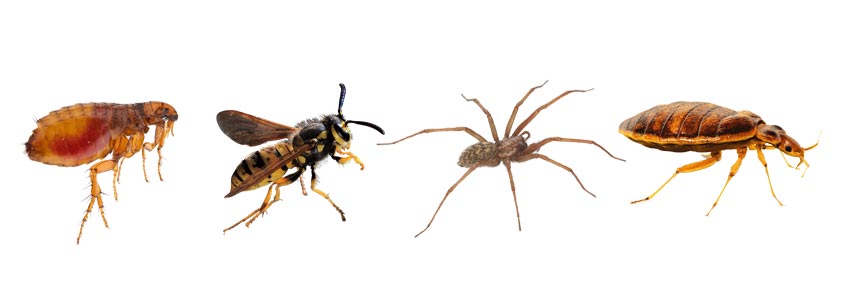
How can you protect yourself from insect bites?
Insects are part of the animal kingdom. They grow, live, and sense their environment, and they represent the largest number of species on Earth, estimated at around one million worldwide (with many species still undiscovered, especially in tropical forests).
There are several classifications used to distinguish insects according to their characteristics. Here, we will focus on flying insects and crawling insects commonly found in our regions.
FLYING INSECTS
Mosquitoes
Despite the sunshine and summer joy, the warm season also brings its share of inconveniences. Among them, biting insects — especially mosquitoes.
First, it is important to know that female mosquitoes feed on blood to nourish their eggs, while males are completely vegetarian and feed only on flower nectar. They can be recognized by their feather-shaped antennae, which they use to locate females by detecting their high-pitched sound.
Contrary to popular belief, mosquitoes are not mainly attracted by light. They use several detection methods: the CO2 we exhale, body heat, and even our movements. Mosquitoes possess tiny sensory hairs capable of detecting subtle air movements. Approximately one person out of five is considered a preferred target because mosquitoes are attracted to certain bacteria present on the skin.
These same bacteria are responsible for body odor, helping mosquitoes identify and target us.
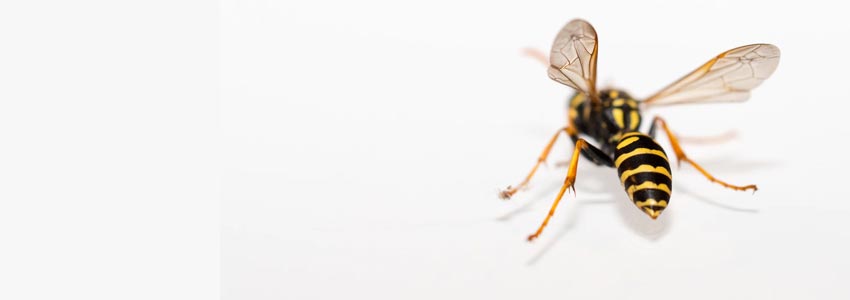
Wasps
According to entomologist Donald Lewis (Iowa State University), hornet and wasp colonies may contain thousands of workers.
Unlike bees, wasps must rebuild their nest every year, which requires considerable time and energy. Early in the summer, the first generations must feed the larvae and the queen, leaving little time for themselves.
At the end of summer, however, mature larvae can feed themselves, freeing the wasps from these responsibilities. This is when they begin invading our tables in search of food.
Special care should therefore be taken when drinking sweet beverages or eating fruits outdoors, as wasps may sting unexpectedly while hovering around glasses or plates.
Hornets
Contrary to popular belief, hornets are not a distinct species but rather a subgroup of wasps. Hornets are about three times larger than wasps and belong to the Vespidae family.
The European hornet is a carnivorous insect that feeds on flies, making it useful for the environment. It may also prey on butterflies, wasps, caterpillars, grasshoppers, and occasionally bees. It even attacks the wax moth, a pest harmful to beehives.
Although their size may appear intimidating, European hornets are generally not aggressive unless threatened.
Asian hornets, however, are far more agile and dangerous. They can hover for long periods in front of beehives and attack in groups, causing multiple stings. They represent a serious threat to bees. Extreme caution is recommended if a nest is found near your home.
CRAWLING INSECTS
Ticks
Ticks belong to the arachnid family (mites). They have eight legs and measure between 2.5 and 4.5 mm as adults, with a dark brown color.
Ticks feed on the blood of their host, making them parasites. They thrive in temperate climates and adapt remarkably well to altitude and humidity. Their preferred habitats include forest edges, clearings, trails, hedges, grassy areas, and even gardens.
Ticks can climb as high as knee or hip level and remain active during warm periods. Below 8°C, they enter a form of hibernation and become inactive.
Ticks may live between 3 and 6 years. They attach themselves to dogs, birds, deer, or humans to feed on blood for several days. Once engorged, their weight may increase by up to 200 times.
Ticks may transmit pathogens through their saliva. In Switzerland, approximately 5% to 30% of ticks carry the bacterium Borrelia burgdorferi, responsible for Lyme disease.
The term “Lyme disease” comes from the town of Old Lyme in Connecticut, USA, where the disease was first officially identified in 1975.
PROTECT YOURSELF DURING WALKS NEAR FORESTS.
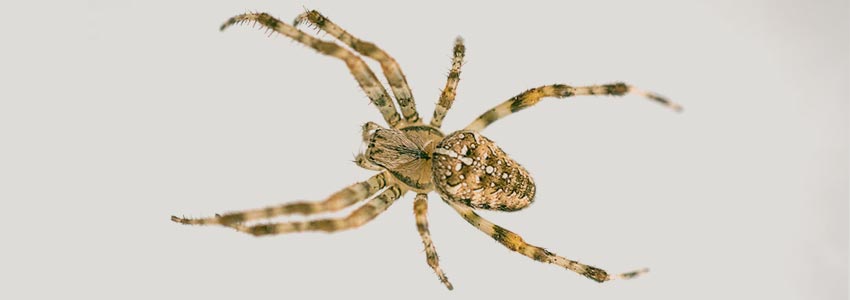
Spiders
Spiders are often feared — 40% to 50% of people suffer from arachnophobia.
Most spiders are harmless to humans because they are too small to pierce the skin, except for certain tropical species whose venom may be dangerous.
Spiders play a vital role in ecosystems by eliminating approximately 400 million insects per hectare, including many nuisance insects such as flies and mosquitoes.
As temperatures drop, spiders seek shelter inside homes where they weave webs of remarkable precision and strength. Once prey is trapped, spiders inject digestive enzymes to liquefy it before feeding.
Spider bites rarely cause serious consequences. Symptoms may include redness, swelling, and mild muscular pain.
Fleas
Fleas measure between 1 and 3 mm and are reddish or brownish in color. There are several species, including water fleas, dog fleas, cat fleas, and human fleas.
Fleas bite repeatedly and cause itching as they move. In homes, they often use pets as transportation before settling in cracks, bedding, carpets, clothing, and furniture.
They do not permanently live on the human body but jump onto people when passing nearby, usually biting the feet and legs.
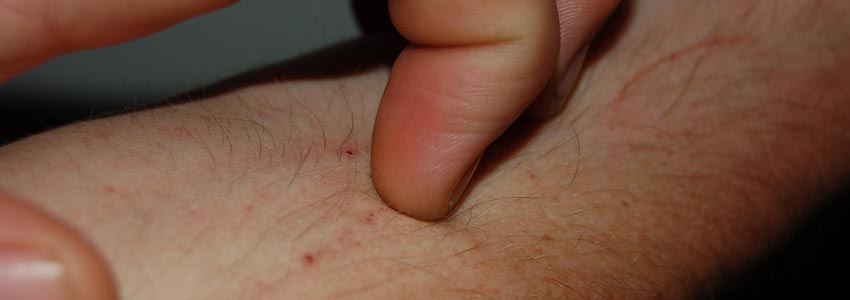
Flea bites typically appear as small red bumps, sometimes with tiny blisters and a central puncture point. Multiple bites often appear grouped together, which distinguishes them from mosquito bites.
Duck Fleas
“Duck fleas” are a natural phenomenon unrelated to pollution.
Even in perfectly clean lakes, “swimmer’s itch” may occur, especially in warm shallow waters rich in vegetation. This skin condition is caused by larvae of duck parasites penetrating beneath the human epidermis, leading to intense itching but generally without serious consequences.
Can Cytamphology Help With Bites, Itching, and Dermatitis?
YES. Within the insect repellent range, Cytamphology offers two products:
Cytamphology uses plant active principles at their highest energetic level and aims to help cells regain balance.
401 and 402 are not insecticides (they do not kill insects), but insect repellents. They act preventively by applying a few drops to exposed skin areas before walks, swimming, gardening, or forest outings.
These products help modify the skin environment, making it less attractive to mosquitoes, ticks, and fleas.
If a bite does occur, apply the product immediately to the affected area. A soothing sensation is generally felt quickly. Reapply several times throughout the day to relieve discomfort and itching.
401 helps repel flying insects such as mosquitoes, hornets, and wasps.
It may also help soothe the pain associated with bites.
Recommended use: apply a minimum of 3 drops to exposed skin areas (face, arms, legs, etc.).
402 helps repel crawling insects such as ticks, spiders, and fleas.
It may also help calm itching and discomfort caused by bites.
Recommended use: apply to exposed body parts before exposure (minimum 3 drops on the face, 3 drops per arm, etc.).
NOTE: In case of tick bites, a course of 068 is recommended (3 oral drops once daily).