
 Français
 Русский
 Deutsch







What is the microbiota?
What Is the Microbiota?
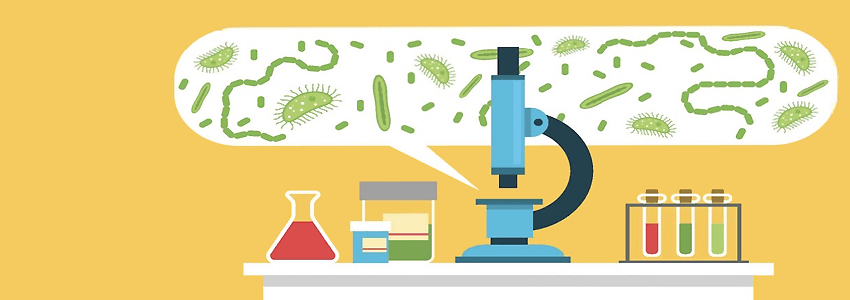
The microbiota refers to the collection of microorganisms that have colonized our body and coexist with us: mainly bacteria, but also viruses, fungi, yeasts, and protozoa.
There are several types of microbiota: the skin microbiota, vaginal microbiota, urinary microbiota, respiratory microbiota, ENT microbiota, and intestinal microbiota — formerly called intestinal flora — which is by far the most important, containing around 100 trillion microorganisms.
The Different Types of Microbiota
The ENT microbiota (ear, nose, and throat) consists of three distinct bacterial ecosystems: the oral microbiota, the ear microbiota, and the nasopharyngeal microbiota.
The acronym ENT refers to:
- Oto for the ears
- Rhino for the nose
- Laryngo for the mouth and throat
The oral microbiota contains more than 700 bacterial species contributing to the health of the mouth (teeth, gums, tongue) and the body overall.
A disruption of this balance (dysbiosis), caused by poor oral hygiene, weakened immunity, or genetic factors, may lead to local infections such as cavities or periodontitis, which may later contribute to more serious diseases, including cardiovascular disorders.
The ear microbiota resembles the skin microbiota.
The nasopharyngeal microbiota, which lines the nasal passages and pharynx, is similar to the oral microbiota, although composed of different microorganisms.
The skin microbiota plays several roles: defense, skin barrier protection, and immune system regulation.
An individual’s microbiota begins forming at birth through contact with the mother’s vaginal flora during natural delivery, or with abdominal flora during cesarean birth.
The skin microbiota feeds on sebum and dead skin cells and contains approximately one million bacteria per square centimeter of skin. It constantly evolves depending on age, sex, environment, lifestyle, hygiene habits, medication use, and illnesses.
An imbalance may be associated with dermatological conditions such as acne, psoriasis, or atopic dermatitis.
The urinary microbiota has only recently been discovered and appears less diverse than the intestinal microbiota. Certain diseases, such as urinary tract infections or prostate disorders, may be linked to an imbalance of this microbiota.
The vaginal microbiota refers to all microorganisms present in the female reproductive system. Its balance is very fragile, and disruptions may lead to infections.
It contains more than 200 bacterial species, predominantly lactobacilli, which help acidify the vaginal environment. Its composition and pH vary throughout life and are influenced by genetics, ethnicity, pregnancy, menopause, as well as environmental and behavioral factors.
Studies have shown that probiotics administered orally or locally may help rebalance the vaginal microbiota and reduce recurrence of symptoms.
The pulmonary microbiota was discovered only recently. Scientists long believed healthy lungs contained no microorganisms.
Its composition is largely influenced by the environment, including climate, geographical location, lifestyle, and exposure to animals.
Although still poorly understood, the pulmonary microbiota appears to play a role in protection against allergic diseases. Smoking, viral infections, antibiotics, weakened immunity, and environmental pollution may all reduce bacterial diversity and disrupt respiratory microbiota balance.
Such imbalance may favor the growth of pathogenic bacteria or fungi and contribute to chronic respiratory diseases such as asthma or chronic obstructive pulmonary disease (COPD).
The Intestinal Microbiota
The intestinal microbiota (formerly intestinal flora) contains approximately 100 trillion microorganisms and weighs between 1.5 and 2 kilograms in adults.
It is the largest microbiota in the human body, representing nearly 70% of all microbiota.
- Composition: Mainly intestinal bacteria. Small quantities are found in the stomach, larger quantities in the small intestine, and the vast majority in the colon, whose environment without oxygen or acidity is ideal for bacterial growth.
- Function: It helps assimilate nutrients, synthesize certain vitamins, and acts as a protective barrier against harmful microorganisms and undesirable substances that could cross the intestinal lining and trigger inflammation.
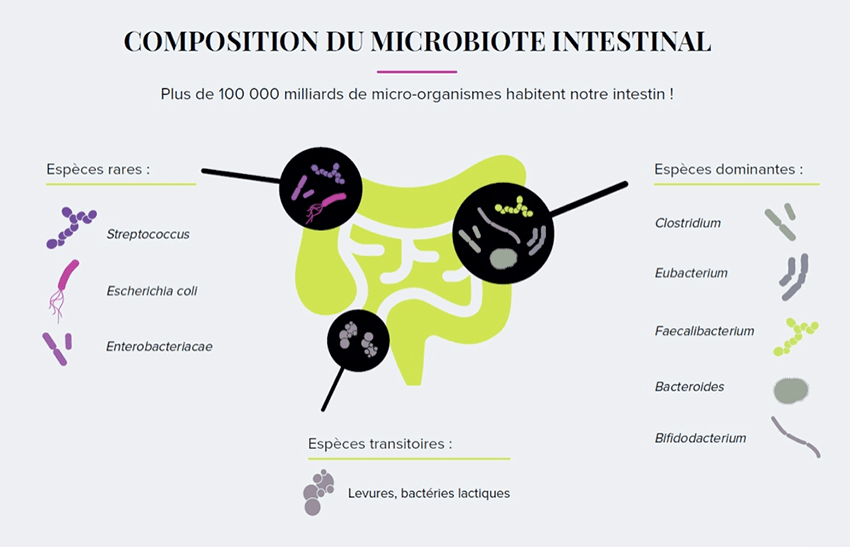
Bacteria in the intestinal flora are involved in the maturation and activation of immune system cells within the intestine, which protect us against pathogens such as bacteria and viruses.
The intestine is the body’s primary reservoir of immune cells. In return, the immune system also influences the microbiota’s composition and diversity.

What Is the Link Between Intestinal Microbiota and Health?
Inflammation is closely linked to immunity and plays an important role in microbiota balance.
Certain bacterial components, such as lipopolysaccharides (LPS), may trigger immune reactions and increase intestinal permeability. These inflammatory molecules may then pass into the bloodstream and contribute to inflammation in other tissues.
Intestinal Diseases
Inflammatory bowel diseases such as Crohn’s disease and ulcerative colitis are associated with inappropriate activation of the intestinal immune system.
Research has identified imbalances between pro-inflammatory and anti-inflammatory bacteria in affected individuals.
Metabolic Diseases
Diabetes and obesity are multifactorial diseases involving genetics, nutrition, and environment.
These metabolic disorders are characterized by chronic inflammation in which the microbiota plays a role.
Diets high in fat increase the proportion of Gram-negative bacteria, which produce inflammatory LPS. Chronic inflammation resulting from these processes contributes to insulin resistance, obesity, and diabetes.
Cancer Development
Research suggests that certain cancers may be linked to specific microorganisms or intestinal dysbiosis.
For example, microbiota imbalance may increase the risk of colorectal cancer, while certain bacteria may contribute to gastric cancer.
Neuropsychiatric Disorders
The enteric nervous system contains approximately 200 million neurons and is often referred to as the “second brain.”
Researchers believe that modifications in the microbiota may alter signals transmitted from the intestine to the brain.
The microbiota is now being studied in relation to autism, schizophrenia, anxiety, depression, and bipolar disorders.

How Can We Improve Intestinal Microbiota Quality?
Diseases linked to dysbiosis may potentially be addressed through several therapeutic approaches:
- A healthy diet promoting beneficial digestive bacteria
- Targeted antibiotic treatments against harmful bacterial species
- Probiotics: beneficial living microorganisms
- Prebiotics: non-digestible food compounds supporting beneficial bacteria growth
- Synbiotics: combinations of probiotics and prebiotics
- Fecal transplantation: implantation of healthy microbiota from a donor
Can Cytamphology Help?
Cytamphology is a science based on harnessing a natural energy emitted by the active principles of plants. It aims to help individuals rebalance and strengthen themselves to restore equilibrium.
Among the products in our range, we recommend:
Recommended for recurring vaginal discomfort, recurrent cystitis, or following excessive antibiotic use.
302 PRIMARY DIGESTIVE MICROBIOTA
(MOUTH – STOMACH – SMALL INTESTINE)
Useful after antibiotics, medication use, smoking exposure, or oral disturbances.
303 LARGE INTESTINE MICROBIOTA
Recommended for bloating, flatulence, difficult digestion, sluggish transit, stress, or following intensive treatments such as chemotherapy.
Recommended following skin trauma such as burns, skin disorders, or exposure to chemical or abrasive products.
Useful in cases of exposure to cigarette smoke, pollution, allergenic substances, or respiratory weakness.
Recommended for red or irritated eyes caused by prolonged exposure to computer screens, tablets, or smartphones. Electromagnetic smog may weaken the eye microbiota.
Recommended dosage for all products:
3 drops daily, orally or applied externally.
All these products form a foundational program related to microbiota imbalances. For a personalized program tailored to your needs, please contact us here.